
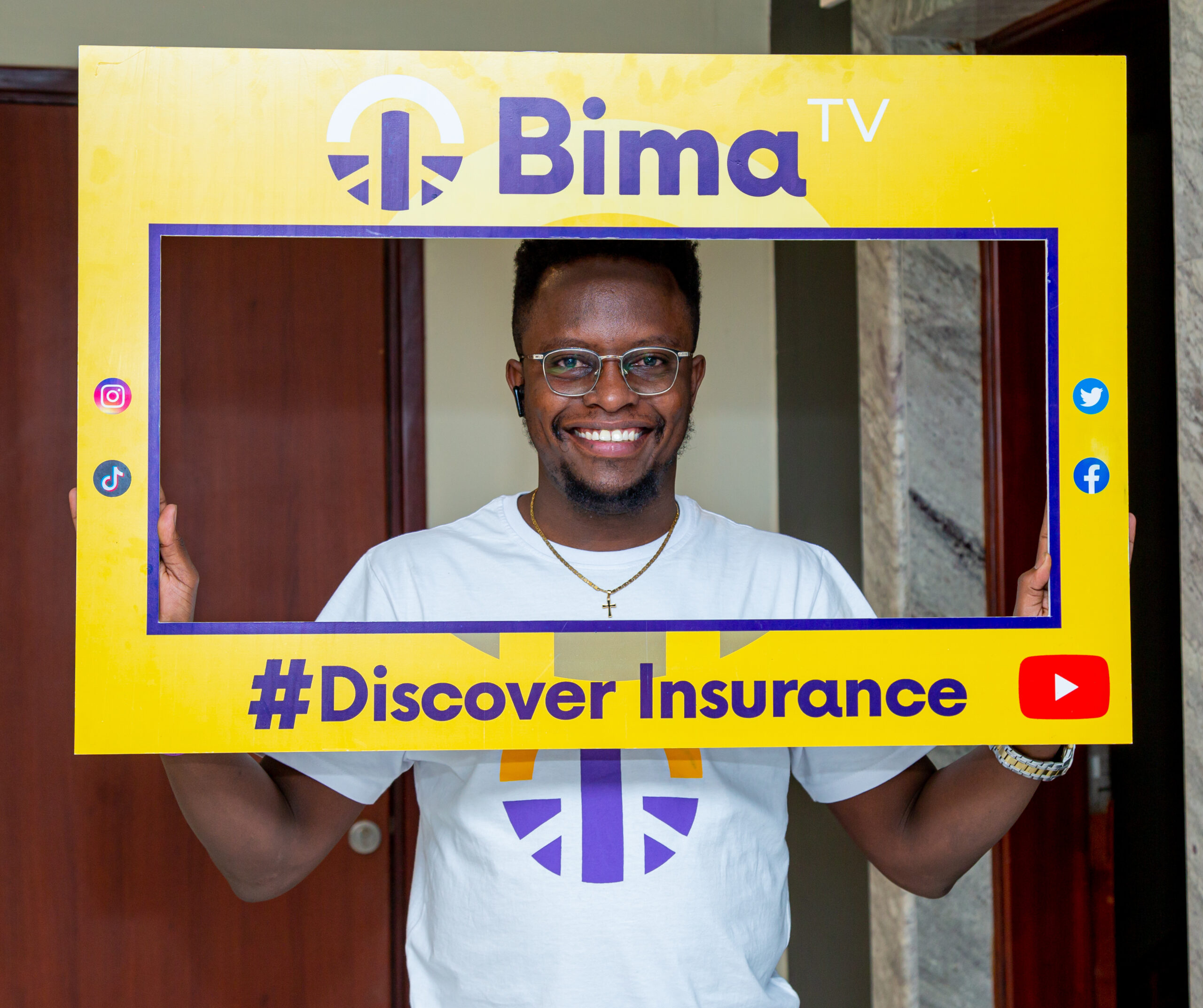
The insurance industry in Kenya faces a persistent awareness gap, particularly among the digital generation, which hinders its unbound growth and accelerated adoption. Traditional insurance consumers are being replaced by tech-savvy individuals who value modern, accessible solutions, given their prevailing environment. While the industry has implemented stop-gap measures to bridge this gap, these efforts have fallen short. Enter BIMA TV, an innovative media platform designed to leverage digital technology tools & approaches to educate and engage the largest chunk of the next-generation of insurance consumers. BIMA TV has emerged as a smart, impactful solution, reshaping how insurance is perceived and consumed, ultimately driving increased awareness and participation in the industry.
The Persistent Insurance Awareness Gap
Insurance plays a vital role in safeguarding individuals and businesses from financial setbacks. However, in Africa, the level of insurance penetration and coverage is notably lower than in other continents. Inadequate resources? Cultural attitudes? Insufficient government regulation? Perhaps, but insurance penetration is noted to be one of the key indicators for assessing the health of the insurance industry. Low insurance penetration in the continent is significantly impacted by the persistent information gap about insurance products and a widespread unawareness about the purpose and advantages of insurance. Additionally, cultural attitudes and technological barriers contribute to the low coverage and adoption rates, with some countries being more affected by technological issues than cultural ones.
The insurance sector has been criticized for sticking to traditional methods of communication, customer conversation and product enhancements and has been slower to embrace new technologies compared to industries like banking and telecommunication.
In Kenya, for example, only 2.4% of the population had insurance in 2023, which is quite low when compared to larger economies. This is according to data from the Insurance Regulatory Authority (IRA) and the Kenya National Bureau of Statistics (KNBS). The general public’s perception that insurance is a luxury or a ‘necessary evil’ required by law further discourages uptake. This general lack of understanding about insurance serves as a significant obstacle. Across Africa, the average insurance coverage was merely 3.1% in 2022. Factors such as limited disposable income and insufficient alternative distribution methods, like mobile technology, hinder broader access to insurance products.
A study conducted in 2021 by the Association of Kenya Insurers highlighted that 27% of people do not purchase insurance due to a lack of knowledge about the various types and benefits available. This situation presents a substantial opportunity for insurance companies to educate the public and tailor their services and products to be more understandable and attractive. By focusing on education and simplifying the purchasing process, insurers have the potential to significantly increase their customer base and make insurance more accessible to a wider audience.
While debate about enhancing insurance awareness and education can touch on introducing affordable insurance products, enhanced introduction of bancassurance, agricultural and micro-insurance among others, the primary approach is influenced by the public’s awareness about the topic. Which necessitates asking: If there is an undeniable gap in insurance awareness and education in the public, what exactly is its impact on the insurance industry?
How the Insurance Awareness Gap Affects the Insurance Industry?
In Kenya, limited understanding and low adoption of insurance have created significant economic and personal challenges for individuals and businesses alike. Without adequate insurance coverage, many Kenyans are exposed to financial risks stemming from illness, accidents, natural disasters, and business losses. Unexpected expenses often force families into poverty, deplete their savings, or push them toward high-interest loans. Similarly, small and medium-sized enterprises struggle to recover from financial setbacks, hindering their growth and long-term stability.
A key driver of this issue is the widespread lack of awareness and understanding of insurance. Misinformation and distrust have led many to view insurance as an unnecessary expense rather than a vital financial safety net. Complex policy language, insufficient consumer education, and limited access to affordable insurance products further exacerbate the problem. This is particularly true in rural areas, where many remain unaware of microinsurance options that could provide affordable protection against risks like drought, medical emergencies, or livestock loss.
On a macroeconomic level, the low penetration of insurance in Kenya stifles the growth of the financial sector and undermines the country’s economic resilience. Insurance plays a critical role in promoting savings, facilitating long-term investments, and stabilizing the economy by mitigating financial shocks. However, Kenya’s underdeveloped insurance industry limits its contribution to economic growth and risk management. For instance, in agriculture—a sector highly vulnerable to climate risks—farmers often bear the full brunt of crop failures, which negatively impacts food security and rural economies. Similarly, in healthcare, the lack of insurance coverage leads to high out-of-pocket expenses, straining household finances and often resulting in delayed or inadequate medical treatment.
To bridge this gap, stakeholders in the insurance industry must collaborate to enhance awareness, accessibility, and trust in insurance products. Public education campaigns, simplified policy terms, and innovative digital solutions can help demystify insurance and encourage uptake. However, efforts must be targeted strategically. As the saying goes, “Going to the sea to fish and knowing where to fish are two different things with vastly different outcomes.” Initiatives must focus on reaching underserved populations effectively, with a particular emphasis on the next generation of insurance consumers. By addressing the knowledge deficit early and leveraging the multiplier effect of technology – such as mobile-based insurance platforms and gamified financial literacy platforms – the industry can foster a culture of preparedness and resilience. This proactive balance will not only correct the current imbalance but also lay the foundation for a better insured and economically stable future.
The Digital Generation: A Modern Face of the Insurance Consumer
In the ever-evolving marketing landscape, the generations referred to as Millennials and Gen Z’s represent a demographic powerhouse that can not be overlooked within Africa’s youth bulge. Millennials are typically being defined as people born from 1981 to 1996 while Gen Z’s includes generation most frequently being defined as people born from 1997 to 2012. They are the ‘Digital Generation’ characterized by digital nativity or aptitude for adapting and using new technologies, social consciousness, and a growing disposable income, presents opportunities for businesses. Another distinguishable characteristic of the digital generation is their financial stability reflecting a strong sense of self-reliance.
The digital generation is now much more aware of what’s important to them. They are much aware of the national economic pressures, the market dynamics, and the new tooling or options that are out there. They want to be ‘served’ not just to be buyers or consumers of products. Maybe because they view themselves as part and parcel of the ecosystem rather than insignificant cogs and wheels. As a result of their increased awareness, it is easier to work with them in an industry plagued by a persistent gap in civic education and public awareness.
It necessitates a nuanced approach since broad generalizations, while acceptable, don’t quite hack what makes these generations a unique force to reckon with. Millennials and Gen Z’s comprises about 80% of the Kenyan population, making them the biggest share of consumers in the market, according to the Kenya Bureau of Statistics (KNBS) National Census of 2019.
In the year 2030, Millennials or even Gen Z members are expected to be contributing the largest share of consumer spending in many countries in Africa, Asia and also some in Latin America. This is according to a report by World Data lab, Nielsen and GfK. In Kenya for example, as inflation eases and the shilling stabilizes, there is potential for an increase in disposable income, which could support higher insurance uptake, especially from the digital generation.
All these factors make the digital generation the best target audience to capitalize on increasing insurance awareness. A ripple effect of enhanced insurance education is easier to achieve with these new insurance.
Stop-Gap Measures taken by the Insurance Industry
Consumers often term insurance as difficult and complex to understand. This sentiment has been established through various studies carried out to establish reasons for low uptake of insurance, the latest being the 2021 FinAccess Survey. In order to offer additional distribution channels and capitalize on market expansion, insurers must harness the digital insurance solutions at their disposal in order to improve internal efficiency and reduce entry time to the market. Technological advancements and innovation are being compounded to increase convenience and affordability. Insurers are increasingly turning to digital platforms to expand their reach, a shift that was accelerated by the COVID-19 pandemic.
At an Insurance CEO’s Summit in 2024, Kalai Musee, a senior supervision manager at Insurance Regulatory Authority (IRA) highlighted that the authority was working around the clock on awareness campaigns channeled through the media and physical meet-ups with members of the public at the local level. Yet remains the need to go above and beyond what the insurance industry is doing to educate and raise awareness of insurance compensation, protection and other forms of insurance-related information to the public. In January 2023, the Association of Kenyan Insurers (AKI) announced that they had launched a website to help consumers learn more about insurance. This website is part of the various initiatives the Association and other players in the industry including the Insurance Regulatory Authority (IRA) are undertaking to increase knowledge and understanding of insurance so that consumers can make informed choices.
To make insurance more accessible and relatable, insurers have been simplifying policy terms and tailoring products to meet the needs of different market segments. Many companies now offer microinsurance products designed specifically for low-income earners, farmers, and small business owners. These policies provide coverage for common risks such as health emergencies, crop failure, and property damage at affordable premiums. Digital innovations, particularly mobile-based insurance platforms, have also played a significant role in improving awareness and uptake. Telecommunications and banking companies like Safaricom and Equity Bank have been embraced by the insurance authorities to utilize their relatable gains in market penetration among the public to sell microinsurance products which ultimately enhances insurance awareness.
These combined efforts are gradually changing perceptions about insurance and encouraging more Kenyans to embrace financial protection.
Enter BIMA TV – A Smart Solution to a Persistent Problem
With the rise of mobile connectivity and high mobile penetration rates, insurers can now provide services to previously underserved populations. Through mobile apps and online platforms, insurance customers in remote areas are gaining access to affordable and accessible insurance options.
By acknowledging the unique characteristics of the Kenyan and by extension, African Digital Generation and adopting a tailored approach, BIMA TV Kenya is leading the innovative methodology of increasing insurance awareness in a fun and educative way to a specific and targeted insurance audience. Digitally savvy consumers have grown to expect on-demand, personalised services from their insurance providers, with smartphones radically transforming the customer service experience.
While legacy media that includes T.V, print and radio remain dominant in Africa where most Africans typically watch TV or listen to the radio daily, the majority of the digital generation (Gen Z and Millenials) rely on social media for news and entertainment since it has more interactive content.
According to a 2023 study by the Aga Khan University Graduate School of Media, the younger media consumers categorized as Gen Z’s and Millennials seek media content that is focused on money-making, saving and financial independence. While 59% of them agree that the news on legacy media is relevant to them, 41% are either indifferent or disagree that legacy media is relevant to them. This in itself presents a huge challenge for a substantial percentage of the biggest national spenders in a few years time to bypass the traditional/legacy media communication as they are after news coverage that addresses their specific needs.
BIMA TV Kenya is a edu-tainment model that leverages digital storytelling, expert interviews, and community-driven initiatives to bridge the gap between the insurance industry and the public in a fun, educative way by addressing the widespread lack of insurance education by simplifying complex topics. Acutely aware that in order to bridge the insurance-awareness gap among the public, it is crucial to target the next generation of insurance consumers who comprise the “Gen Z” and “Millenials”. It is why innovation has to be reorientated towards this digital generation since traditional methods of communication (legacy media) fail to address their unique needs & interests – which incidentally are still preferred by a substantial chunk of insurance industry players. While there is plausible logic in using these traditional media since older generations and ‘renewable/continuing customers’ make up the bigger base market of the insurance industry, it is this dinosaur-like tendency of slow adoption of emerging technologies that is partly responsible for low penetration and stagnated growth in the insurance sector.
BIMA TV Kenya positions itself as a dedicated insurance news media by leveraging technology use in a concerted effort to democratise access to insurance products and services. By utilizing data analytics models and data driven decisions for marketing to structure information, new insights have been unlocked that have helped to debunk insurance myths among the public. As the audience has gained more knowledge on insurance, BIMA TV Kenya has moved steadily and slowly from awareness to advocacy.
BIMA TV’s Impact on the Insurance Industry
Redefining insurance education for the digital generation has the potential to revolutionize accessibility and engagement, making complex financial concepts easier to understand. By leveraging social media and gamified learning experiences, BIMA TV has been able to reach thousands of younger and underserved populations who rely heavily on digital channels for information. Interactive tools such as explainer videos, quizzes, and real-world scenario simulations can break down industry jargon, making insurance more relatable. This shift has fostered greater awareness but encouraged proactive decision-making regarding financial protection, ensuring that individuals are better prepared for unexpected risks.
Beyond interactive engagement, the dedicated insurance media has encouraged higher financial and risk literacy, ultimately fostering greater adoption of insurance policies at an earlier stage in life. With better knowledge of the role insurance plays in financial planning, young consumers feel more confident in securing health, life, auto, or business coverage, reducing their long-term financial vulnerability.
At the annual BIMA TV Cup, a sports tournament bringing the insurance industry and community members, leverages the universal appeal of sports to break down the complexities of insurance into relatable and engaging formats. Cianna, an attendee of the BIMA TV Cup 2024 edition, that brought together different car club members to challenge for a football tournament, highlighted how informative the breakdown of subtleties of each insurance option available to the drivers were. From 3rd party to comprehensive insurance coverage, attendees gained a deeper understanding of the diverse range of protections offered and their respective benefits. By elucidating the scope of coverage, drivers were equipped to assess potential risks and tailor their insurance plans accordingly, ensuring greater peace of mind on the road. And keeping in line with its strategic collaborative approach, BIMA TV Kenya engaged AKI agents to advocate, address and promote insurance knowledge and resilient solutions in the sector. They were at hand to emphasize and help participants of the tournament check authenticity of their car insurance certificates and encourage application/utilization of modern media platforms as insurance awareness avenues. The rollover benefits also included enhancement of trust and inclusivity between the public and insurance regulatory authorities. Such outreach stands as a testament to the power of education and engagement in promoting insurance literacy and informed decision-making.
Conclusion
The continental insurance sector is undergoing an exciting transformation as it takes up its place in the digital age. Digitisation and innovation are dynamic trends that will continuously be widely adopted as attitudes change towards technology adoption within the insurance industry. Artificial Intelligence (A.I) and data-centric approaches will be at the forefront of the next frontier of innovative technologies that will expand the reach of the insurance industry. While many argue that these technologies’ adoption might be disruptive to the insurance industry generally, there is more to suggest that they could have a multiplier effect on raising awareness and educating the public in an exciting way never previously achieved.
Silver bullets don’t work in this digital age nor do straightforward solutions with miraculous results. And thus, to effectively cure the public’s insurance unawareness and miseducation, it would require a myriad of tested approaches as well as their various combinations to patch up the aforementioned inefficiencies. However, the insurance industry can start by empowering such initiatives and concerting its resources to change the situation.
BIMA TV is reshaping how insurance education is disseminated to the public by shifting focus from traditional awareness campaigns to interactive advocacy and digital engagement; ensuring insurance reaches and resonates with future consumers.
In the long run, a digitally literate generation with strong insurance knowledge can contribute to economic stability, reducing financial distress during crises such as medical emergencies, natural disasters, or job loss. By redefining insurance education through digital innovation, both individuals and the broader economy stand to benefit from a more financially resilient and tech-savvy population.
If it is uncontested that we live in fast and widely changing times, then why should the insurance industry not navigate these oscillating times and adapt quickly and appropriately?


